 View Scroll
In 2025, groundbreaking technologies are redefining industries, economies, and daily lives. Businesses, governments, and individuals who adapt to these developments stand to gain significant advantages. Below are the most influential technology trends driving global transformation this year.
1. Generative AI Moves Beyond Text and Images
Generative AI has evolved from producing basic content to creating code, music, video, and even scientific research simulations. Companies are deploying these models to accelerate drug discovery, streamline customer service, and personalize products at scale, while new regulations aim to ensure ethical use and transparency.
2. Quantum Computing Enters Practical Applications
2025 marks the beginning of commercially viable quantum solutions. Organizations in finance, logistics, and materials science now access quantum-powered tools for portfolio optimization, supply chain risk modeling, and molecular design, offering capabilities far beyond traditional computing.
3. Edge Computing Powers Real-Time Insights
With the explosion of connected devices, processing data at the edge — closer to its source — reduces latency and enhances security. From autonomous vehicles to industrial robotics and remote healthcare monitoring, edge technology is enabling real-time decision-making in critical scenarios.
4. Biotechnology and Bioinformatics Advance Precision Medicine
Breakthroughs in gene editing, personalized vaccines, and bioinformatics are enabling treatments tailored to individual genetic profiles. 2025 has seen wider deployment of CRISPR-based therapies and AI-driven diagnostics that improve outcomes while reducing costs.
5. Sustainable Tech Drives Green Transformation
Climate-conscious innovation dominates corporate agendas. Renewable energy storage, carbon capture technologies, and circular economy platforms are becoming mainstream. Data centers increasingly run on clean power, while supply chains adopt greener materials and processes to meet sustainability targets.
6. Metaverse Applications Find Real-World Use
The metaverse has shifted from hype to practical utility. Companies use immersive environments for workforce training, product design, and customer engagement, while virtual marketplaces and hybrid events attract millions of participants globally.
7. Cybersecurity Evolves to Counter Sophisticated Threats
With cyberattacks growing in complexity, 2025 has introduced AI-augmented security platforms capable of detecting anomalies in real time. Zero-trust architectures and biometric authentication have become standard to protect sensitive data in increasingly distributed digital ecosystems.
8. 5G and 6G Networks Expand Connectivity
Next-generation wireless networks continue to roll out, enabling ultra-fast connections, higher bandwidth, and broader coverage. These networks are critical for supporting emerging applications such as autonomous drones, remote surgeries, and massive IoT deployments.
9. Robotics and Automation Redefine Labor
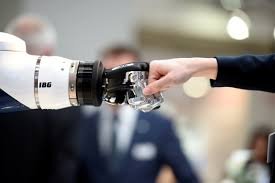
Smarter, more dexterous robots are taking on tasks across manufacturing, logistics, healthcare, and hospitality. Human-robot collaboration is reshaping workflows, enhancing productivity, and addressing labor shortages without sacrificing quality or safety.
10. Digital Twins Enhance Planning and Maintenance
Digital twin technology is now widely used to simulate and monitor assets — from buildings and vehicles to entire cities. These virtual replicas allow for predictive maintenance, optimized energy use, and more informed strategic planning.
Conclusion
The technology trends of 2025 are not just advancing innovation but are also solving pressing global challenges. Staying informed and leveraging these innovations effectively will determine success in a rapidly evolving landscape. Organizations and individuals who embrace these changes will lead the way in creating a smarter, more sustainable future.
If you’d also like, I can draft a meta description, SEO-friendly subheadings, and internal linking suggestions for better on-page optimization. Let me know!